 Skip to content

Looking for a WordPress event manager plugin? You’ve come to the right place.
An event manager plugin handles the jobs that get messy fast: listing upcoming events, showing a calendar, taking registrations, selling tickets, and keeping track of who actually turns up. Some plugins do one of those things very well. Others try to do all of them.
That’s really the only decision that matters here. If you just need to publish a schedule, a lightweight calendar plugin will do the job for free. If money changes hands, you need registration, payments, and check-in, and the plugin you pick will shape how much of that you can do without buying add-ons.
I looked at the event plugins that are actively maintained in 2026, checked their current pricing and features, and narrowed it down to 11 that are worth your time.
Plugin Name | Best For | Key Feature | Price (Starting) |
|---|---|---|---|
Events Manager | The most capable free option | Unlimited events and bookings, multi-ticket support, guest submissions, Google Maps, recurring events, time zones | Free / Pro from $129 per year |
Eventnetic | Ticketing with recurring dates and reserved seats | Unlimited events even on free, seat maps per venue, PDF tickets, QR check-in, Stripe and PayPal, no commission | Free / from $99 per year or $199 once |
EventOn | Good-looking calendars out of the box | Month, schedule, tile and live views, repeating events, event schema, shortcode generator, Gutenberg block | Free (Lite) / Full $50 one-time |
MotoPress Calendar | Class timetables and venue schedules | Google Calendar style admin, unlimited calendars, recurring events, four views, block editor blocks | From $39 per year / $149 lifetime |
Events Schedule | Instructors, studios and weekly timetables | 12 timetable styles, visual schedule builder, filters by type, location and instructor, WooCommerce | $39 one-time |
Eventin | Conferences with speakers and tickets | Multi-tier tickets, QR check-in, speaker and schedule modules, email automation, Zoom and Google Meet | Free / Pro from $99 per year |
The Events Calendar | Large calendars that need to scale | Seven calendar views, recurring series, filters, ticketing, community submissions, big add-on ecosystem | Free / plans from $259 per year |
Events Calendar Registration & Tickets | Paid registration without buying add-ons | Calendar, list and grid views, custom registration forms, coupons, waitlist, attendee export, Stripe and PayPal | $35 one-time |
WP Event Manager | Event listing directories | Ajax-powered listings, shortcodes, guest submissions, filtering, widgets, caching support | Free / add-on bundles from $99 per year |
Event Organiser | Complex recurrence and developer control | Advanced repeat patterns, venue management, OpenStreetMap and Google Maps, iCal import and export, large API | Free / Pro from £50 one-time |
Amelia | Sites that need appointments and events together | Events module beside appointment booking, recurring and multi-day events, Stripe and PayPal, no double-booking | Free (Lite) / paid from $49 per year |
Galleryberg | Showing off photos from your events | Four gallery layouts, lightbox with zoom and swipe, caption controls, server-side rendering | Free / paid from $29 per year |
1. Events Manager
Events Manager has been around since 2008 and still offers the most generous free version of any event plugin on this list. It handles single and multi-day events, recurring events, bookings, and attendee limits without asking for a cent.
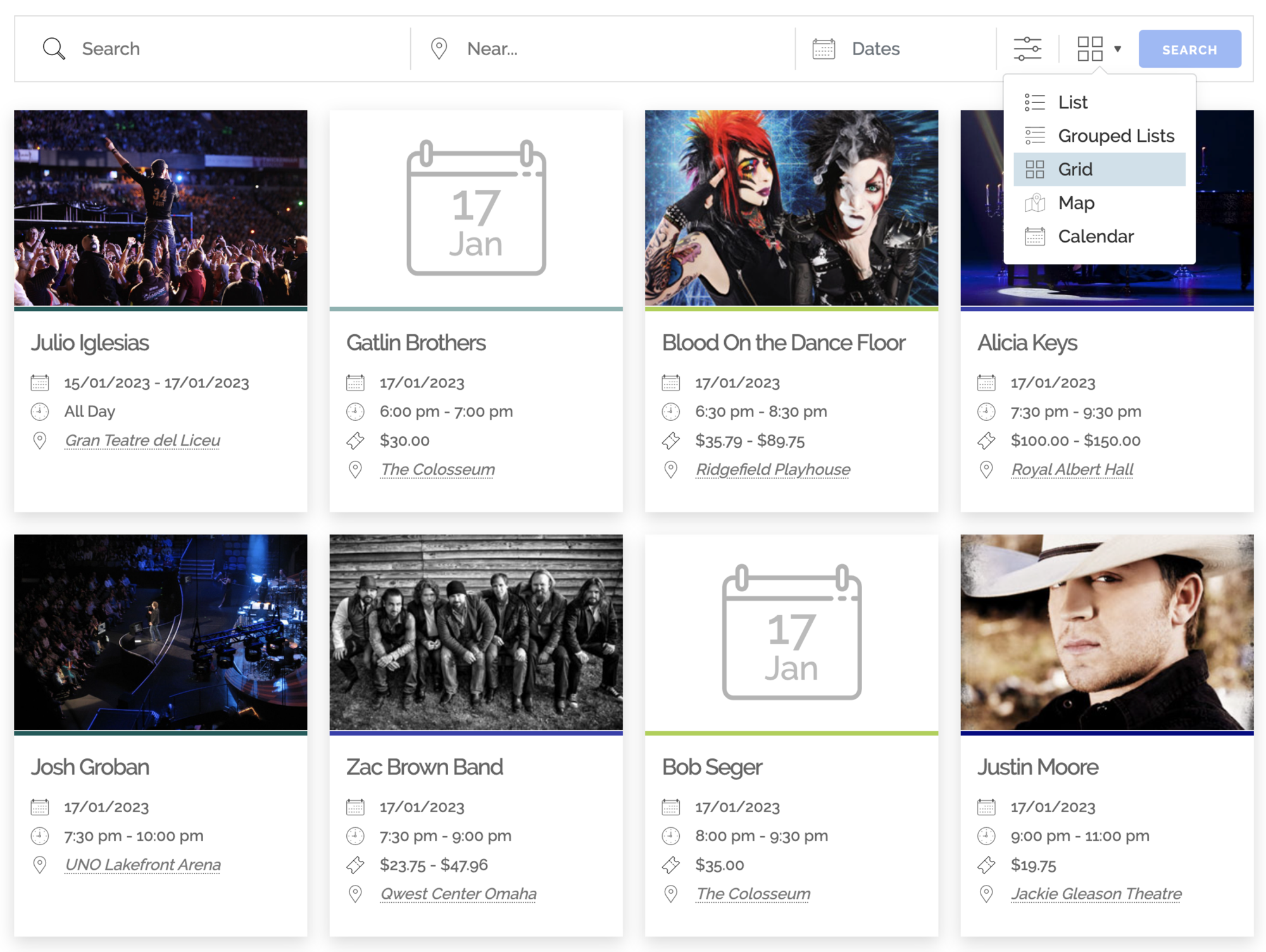
You can assign locations, categories, and custom attributes to your events, and there are widgets for locations, events, and calendars that you can drop anywhere on your site. Guest event submissions are built in, which is handy for community calendars where other people post the events.
The plugin also handles multiple time zones properly and plays nicely with SEO plugins.
Here’s what the free version gives you:
- Unlimited events and bookings
- Simple event registration
- Multi-ticket support
- Multi-site support
- Shortcode support
- Events in different time zones
- Guest event submissions
- Google Maps integration
- Compatible with SEO plugins
The Pro add-on unlocks the money side: Stripe, PayPal and Authorize.net payments, custom booking forms, PDF tickets, QR code tickets, coupon codes, offline payments, and full CSV export of attendees. Pro starts at $129 per year for a single site, and there’s a higher Pro tier at $169 per year that bundles every separately sold add-on. Both are discounted often, so check the current price before you buy.
2. Eventnetic
Eventnetic is the newest plugin on this list and the one I’d point you to if you’re selling tickets to something that happens more than once. It handles recurring dates, ticket sales, attendee registration, and reserved seating from the same system, which is unusual at this price.
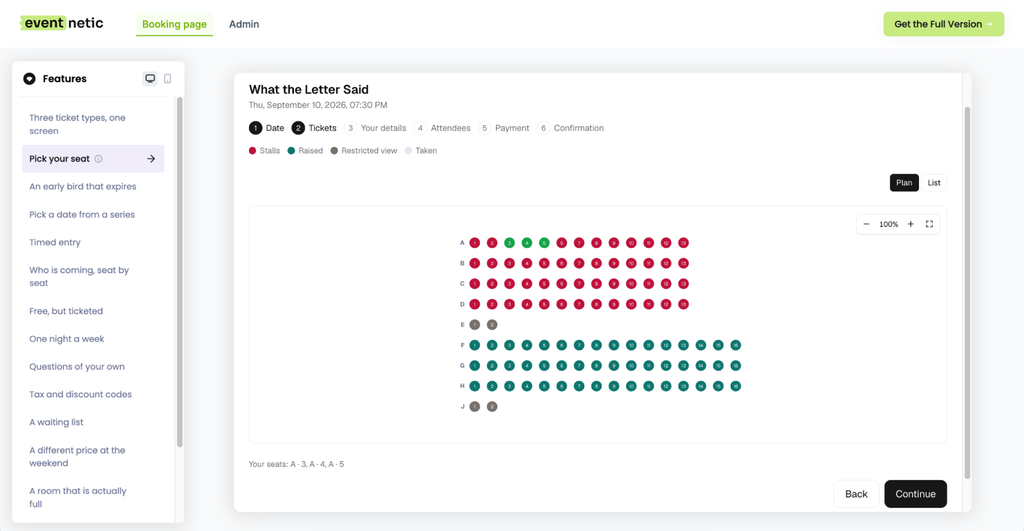
It suits conferences, workshops, classes, performances, tours, and any business that wants to sell tickets directly from its own site instead of handing a cut to a platform.
The free version is the part worth paying attention to. There’s no event limit, no booking limit, and no time limit. You can create unlimited events and bookings, set up multiple ticket types with their own prices and capacities, take cash at the door, and check attendees in by name or booking code.
Paid plans add online payments through Stripe and PayPal, recurring event dates, PDF tickets, QR code check-in, a ticket designer, and interactive seat maps. The way recurring events work is the clever bit: a weekly class is one event with a list of dates, not fifty copies. Each date gets its own capacity, its own price, and its own attendee list, so cancelling one Tuesday doesn’t touch anyone booked on the others.
Seating works the same way. The seat map belongs to the venue rather than the event, so every show in that room sells the same seats, and a seat booked on Friday is free again on Saturday.
Key features of Eventnetic include:
- Unlimited events and bookings, including in the free version
- Multiple ticket types with individual prices and capacities
- Recurring event dates with separate availability per date
- Stripe and PayPal payment support
- PDF tickets and QR code check-in
- Reserved seating with reusable venue maps
- Different pricing by seating section
- Custom registration fields and per-attendee questions
- Coupons with usage limits and expiry dates
- Waiting list that offers freed-up places automatically
- Deposits and part payments
- Attendee management and check-in tracking
- No commission taken from ticket sales
Paid plans start at $99 per year for one site, or $199 once for a lifetime licence. Pro covers five sites and Elite covers 25. Because payments go straight into your own Stripe or PayPal account, Eventnetic never takes a percentage of your ticket revenue, which adds up quickly if you sell in any volume.
3. EventOn
When it comes to how the calendar actually looks on the front end, EventON is still hard to beat. It has been running since 2011 and is used on more than 65,000 sites.
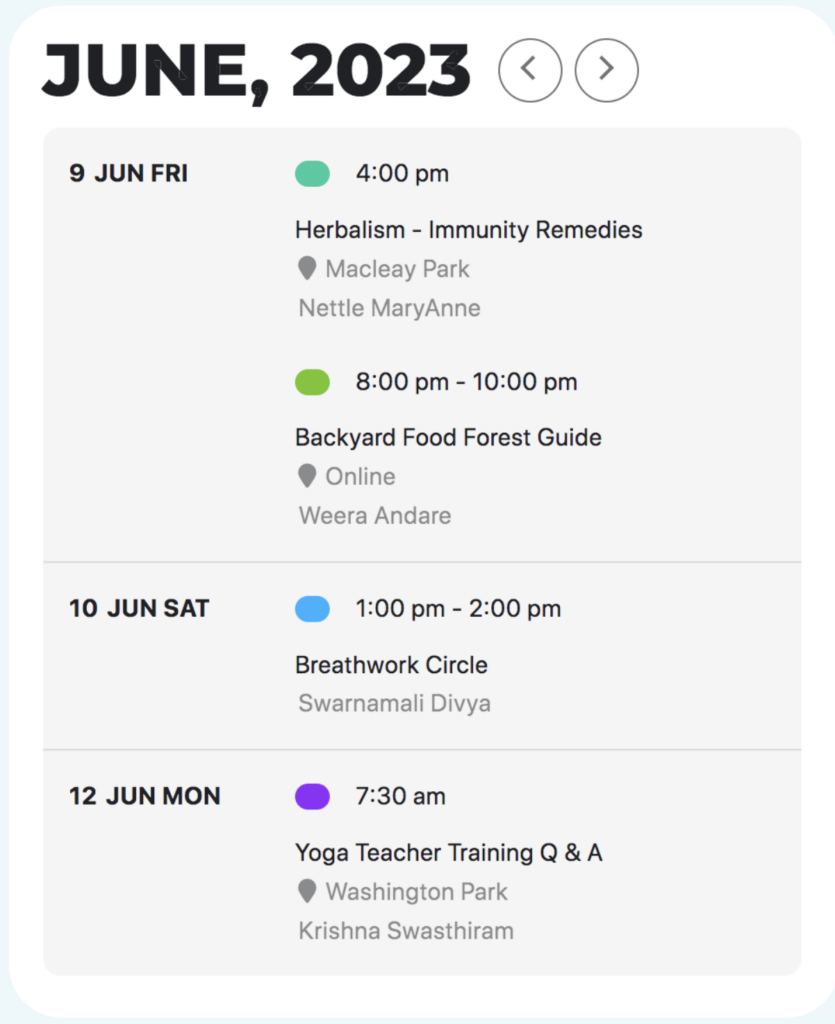
Worth knowing before you start: EventON now comes in two parts. EventON Lite is free on WordPress.org and is genuinely usable on its own, with unlimited events, repeating schedules, virtual events, and a Gutenberg block. EventON Full is sold directly from myeventon.com rather than CodeCanyon, and it’s what you need if you want the premium add-ons.
The Lite version gives you month, schedule, tile and “live now” calendar views, event colours and Font Awesome icons, Google Maps with directions, event organisers, custom meta fields, and event schema with JSON-LD markup for search engines. There’s an interactive shortcode generator that works in both the block editor and the classic editor, plus an OpenAI integration that will draft event titles and descriptions for you.
You can also add event images and descriptions with maps and directions, create multi-day events, let users add events to their own calendars, and add social share icons.
Some of the features you get:
- Single and multi-day event support
- Repeating events, including custom patterns
- Event image, description and location
- Shortcode generator and Gutenberg block
- Custom meta fields
- Font Awesome icons
- Filter and sort events
- Social share icons
- Custom time formats
- Custom event colours and gradients
- Event organisers
- RTL support
- EventCard designer
- Featured events
- Hide or delete past events
- Event search
- Per-event time zones with “view in my time”
- Event schema and JSON-LD
EventON Lite is free. EventON Full is a $50 one-time payment for one site, which includes lifetime plugin updates and a year of support. The catch is the add-ons: tickets, seats, RSVP, extra calendar views and so on are sold separately and priced individually, with the Event Tickets add-on alone at $120. If you need full ticketing, price the whole stack before you commit.
4. WordPress Calendar Plugin by MotoPress
The MotoPress Events Calendar takes a different approach to everything else here. Instead of creating events as posts, you work in a visual calendar that behaves like Google Calendar: click a date, drag to set the time, fill in the details.

TThat makes it a good fit for anyone who manages a schedule rather than a series of one-off announcements: fitness studios, tutors, community centres, schools, and event venues.
It’s built around the block editor, with dedicated WordPress blocks for the calendar, event lists, and individual event pages, so you can assemble a custom event layout without touching code.
Key features of MotoPress Events Calendar:
- Visual drag-and-drop calendar admin
- Unlimited events and unlimited calendars
- Recurring events with flexible repeat rules
- Month, week, day and list views
- Event search and filters by calendar, organiser, category, weekday, tag and location
- Dedicated WordPress blocks for calendars and single event pages
- Colour-coded events with categories, organisers and locations
- Import and export via iCal
- Mobile-optimised layouts
One thing to be clear about: this is a scheduling and display plugin, not a booking system. There are no registrations, tickets, or reminder emails, so if you need to take money, pick something else from this list.
Pricing is $39 per year for a single site, $149 per year for up to 25 sites, or $149 once for a lifetime single-site licence. There’s no free version, but there is a 7-day free trial.
5. Events Schedule
If you’re an instructor, you’re going to like this one. Events Schedule is built specifically for timetables: classes, sessions, and anything else that repeats on a weekly grid.
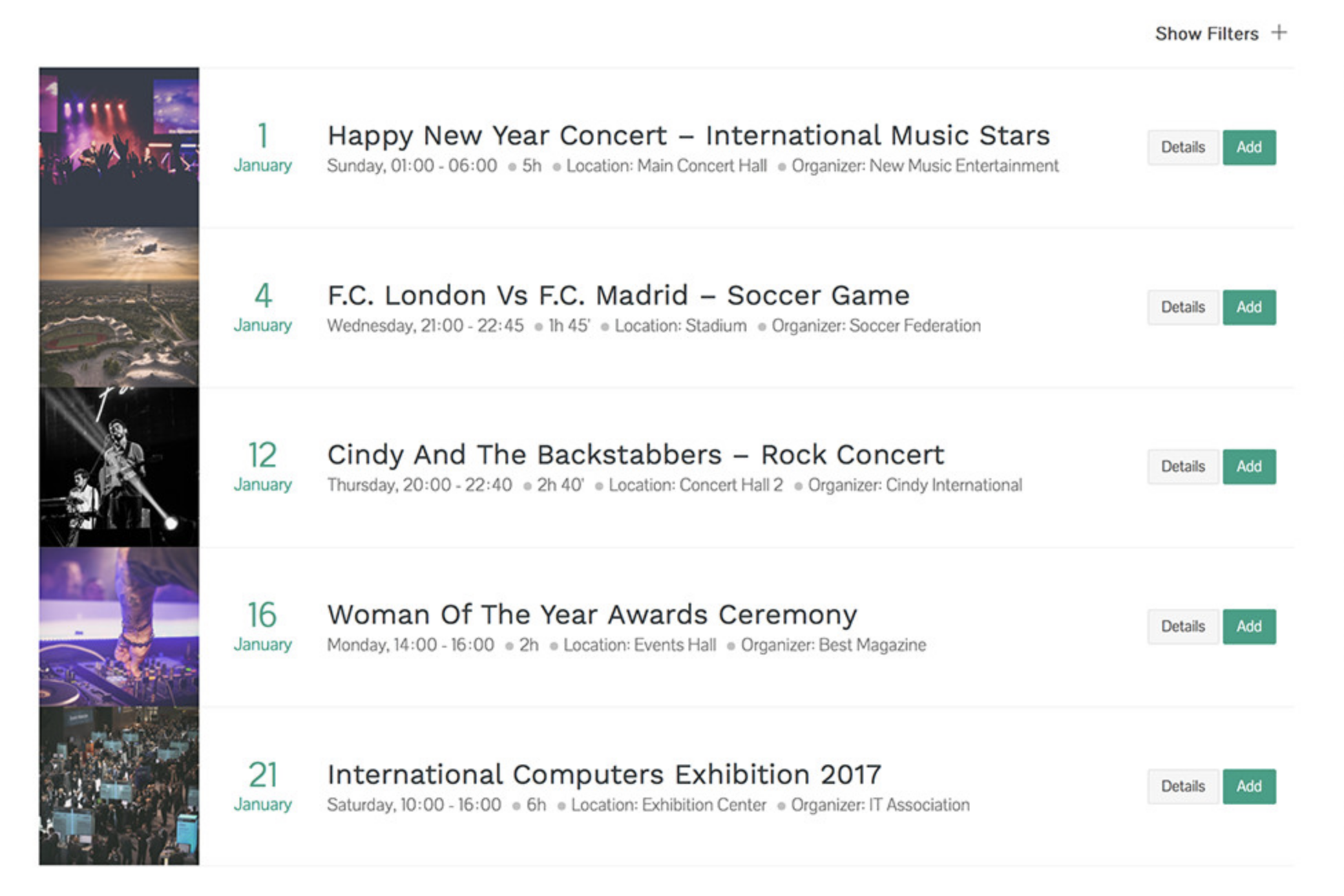
The You get 12 different timetable styles, and switching between them is a single click. The weekly tabs and large list styles work well for dance studios, gyms and sports centres, while the compact list style fits conferences and workshops better. Schools and colleges tend to use the weekly schedule style.
The real strength is the visual schedule builder. Adding classes works much like writing WordPress posts, and you can assign class types, locations and instructors so visitors can filter down to what they’re looking for.
More features of the Events Schedule plugin:
- Easy visual schedule builder
- 12 unique timetable styles
- Fully responsive and retina ready
- Build unlimited schedules and classes
- Set classes to repeat weekly automatically
- Five filter categories: type, location, instructor, day and time of day
- Two pop-up modal layouts, light and dark
- Hide content, filters and labels as needed
- Display cancelled events
- Call-to-action buttons per class, including add-to-iCal
- WooCommerce compatible
- Visual Composer and Elementor compatible
- WPML ready
The plugin costs $39 as a one-time purchase on CodeCanyon, which includes future updates and six months of support. It’s sold over 9,000 copies and holds a 4.43 star rating. One caveat for block editor users: it is not Gutenberg optimised, so you’ll be placing schedules with a shortcode.
6. Eventin

Eventin is the most complete option here for conference-style events, the kind with speakers, session schedules, and tiered tickets. It bundles event creation, ticketing, attendee management and automation into one plugin rather than spreading them across paid add-ons.
Setup is straightforward and the front end is mobile-responsive out of the box. You can build event pages with Elementor, Gutenberg, Divi, Beaver Builder or Oxygen, and there’s a visual template builder for event landing pages, tickets and certificates.
Some of the things Eventin does well:
- Multi-tier ticketing with early bird, VIP and group pricing
- Speaker profiles, listings and multi-track schedules
- Recurring events on daily, weekly, monthly or yearly patterns
- QR code tickets and check-in
- Custom registration forms and RSVP with reports
- Email automation builder for confirmations, reminders and follow-ups
- WooCommerce, Stripe and PayPal payments
- Zoom and Google Meet integration for virtual and hybrid events
- Google Maps for event locations
- Event calendar with iCal, Google and Outlook export
- Certificate builder for attendees
- Multivendor event marketplace through Dokan
- FluentCRM, Zapier and webhook integrations
- AI-assisted event creation
The free version on WordPress.org covers event creation, listings, basic ticketing and Zoom, and it’s rated 4.6 out of 5 from over 330 reviews. Pro starts at $99 per year for two domains, with Premium at $299 and Agency at $599. Lifetime licences start at $199. Every paid tier includes every pro feature, so the only thing you’re choosing is how many sites you need.
7. The Events Calendar
The Events Calendar is the most widely installed event plugin in the WordPress directory, and the free version alone is enough for a lot of sites. You can create and publish an event in under five minutes.
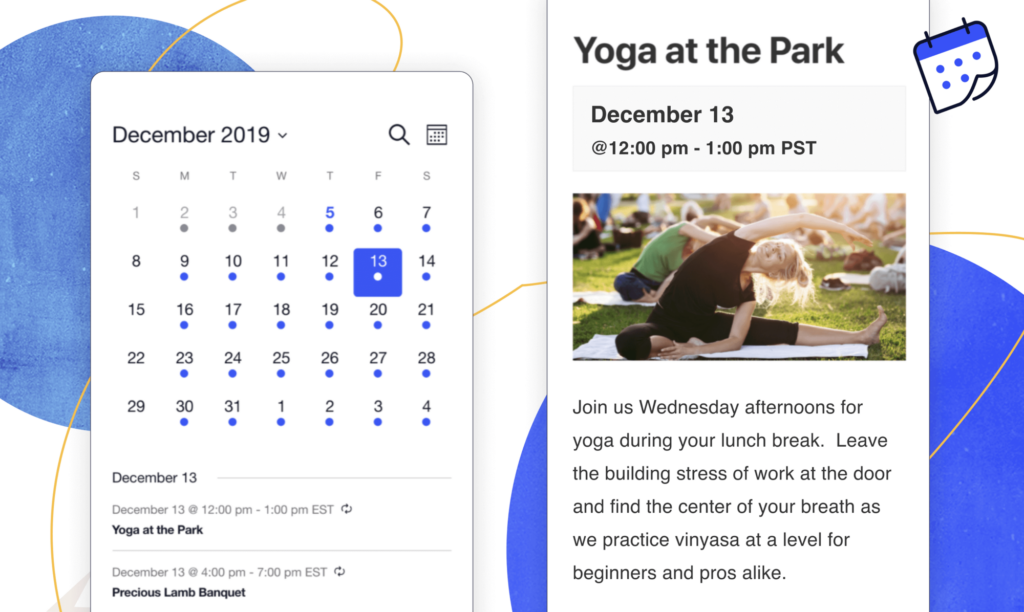
The free plugin gives you:
- Rapid event creation
- Saved venues and organisers
- List and day views
- Calendar month view
- Event search
- Google Maps
- Upcoming events widget
- Google Calendar and iCal exporting
- Event categories and tags
- Fully responsive design
- Caching support
Paid plans add recurring event series, four more calendar views including photo and map, event filters, ticket sales through Stripe, PayPal and Square, community event submissions, QR code check-in, and at the top tier a seating map builder and email marketing tools.
Pricing changed significantly in 2026. Instead of buying Pro and each add-on separately, the paid offering is now three bundled plans: Essentials at $259 per year, Pro at $399 per year, and Elite at $599 per year. That’s a real jump from the old per-add-on model, so if you were expecting the $149 Pro licence, budget accordingly. For a simple calendar, the free version still does the job.
8. Events Calendar Registration & Booking
This one sits in a useful gap: a paid registration and ticketing system for a flat one-time fee, with no add-ons to buy on top. It had a complete overhaul in mid-2026, so the version you get now is not the plugin it was a couple of years ago.
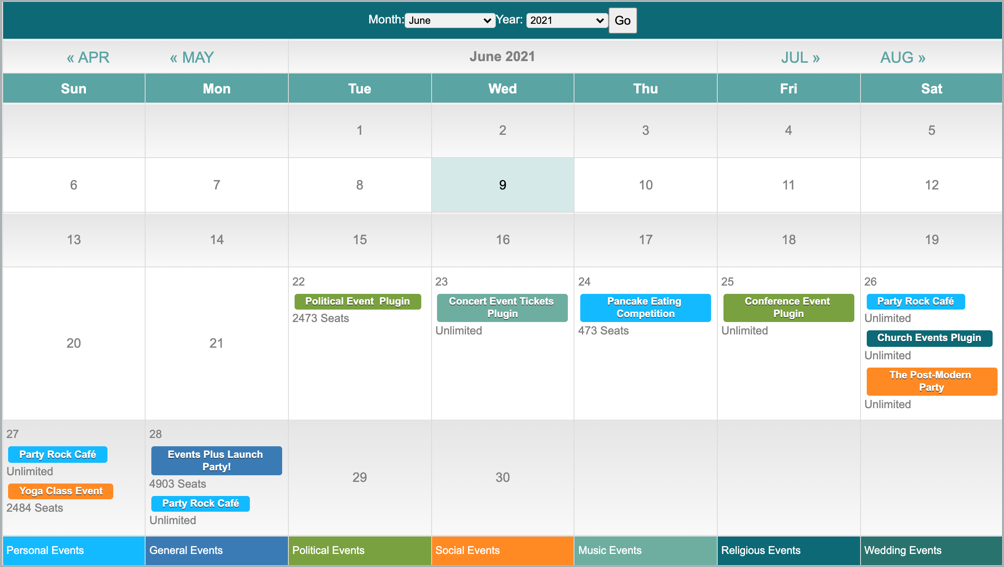
You can display a full-width responsive calendar, an events list, or a modern grid view with category filters, and colour it to match your theme. Single event pages support images, social share buttons, and a countdown timer.
There’s an admin dashboard where you track payments, view upcoming events, and manage attendees.
Features available in the plugin:
- Online event registration and booking
- Ticket types with their own prices
- Register and pay via PayPal, Stripe or Authorize.net
- Custom registration forms, including per-attendee fields
- Recurring events
- Discount coupons
- Seat limits per event
- Waitlist
- Google Maps integration
- Confirmation and reminder emails
- Export attendees to CSV
- Colour-coded categories
- Countdown timer
- Sidebar widget
- Multilingual and translatable
- Accept donations for events
It costs $35 on CodeCanyon with future updates included. It’s sold over 7,000 copies, though its 3.80 star rating is the lowest on this list, so it’s worth trying the demo before you buy. Like Events Schedule, it’s shortcode-driven rather than Gutenberg-native.
9. WP Event Manager
WP Event Manager is the lightweight, listings-first option. Rather than building everything around a calendar grid, it treats events as directory entries that visitors can search and filter, which suits sites where several different organisers post their own events.
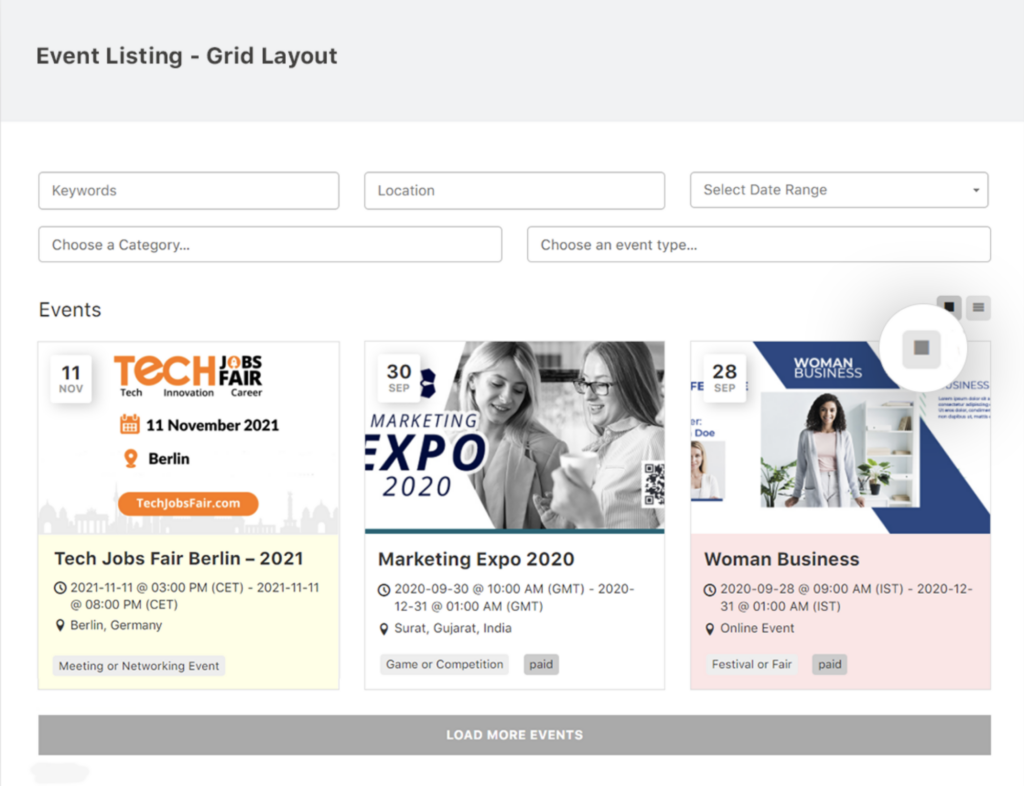
You display listings with shortcodes, and you can add front-end forms so guests and registered users submit their own events. Locations can be assigned and browsed, and there are widgets for recent, upcoming and featured events.
Features in the free core plugin:
- Create and manage events
- Ajax-powered event listings
- Shortcode support
- Event filtering and search
- SEO friendly
- Fully responsive
- Guest event submissions
- Event categories and locations
- Event widgets
- Template tags for theme developers
- Caching support
- Debug mode
The trade-off is that almost everything beyond listing events is a separate add-on: calendar, Google Maps, event registration, WooCommerce ticket sales, event alerts, bookmarks, sliders, organisers, Google Analytics and emails. Buying them individually adds up fast, so most people end up on a bundle. Bundles start at $99 per year. The core plugin stays free.
10. Event Organiser
Event Organiser takes the most WordPress-native approach on this list. Events are a custom post type, so they behave like posts and fit into your theme the way posts already do. If you’re comfortable with templates and hooks, that’s a real advantage.
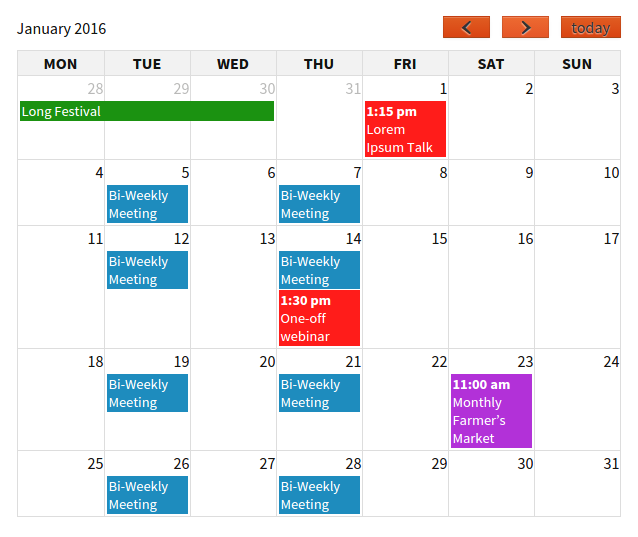
CWhere it really stands out is recurrence. You can build genuinely complicated patterns, like “the third Tuesday of every fourth month”, and then add or remove individual dates from the series afterwards.
Features of the free plugin:
- Single, multi-day and recurring events
- Complex repeat patterns
- Add or remove specific dates from a series
- Create and manage venues
- Google Maps and OpenStreetMap support
- Calendar, event list and event agenda widgets
- Shortcodes for calendars, lists, agendas and venue maps
- Colour-coded event categories
- Venue pages
- Import and export via iCal
- Custom permissions per user role
- Extensive developer API with actions and filters
The free plugin has over 20,000 active installs and a 4.6 star rating. Event Organiser Pro adds bookings, custom booking forms, customisable emails and payment gateways, priced as a one-time licence from £50 for Personal, £90 for Business and £120 for Developer, with the higher tiers bundling extensions like iCal sync and discount codes.
One honest note: development has slowed. The plugin went a long stretch between updates before two releases in mid-2026, one of which was a security fix. It still works and it’s still maintained, but it’s no longer moving fast.
11. Amelia
Amelia is best known as an appointment booking plugin, and its events module is an extension of that rather than a standalone event system. That’s exactly why it’s on this list: if your site already needs appointments, running events through the same plugin saves you a second system.
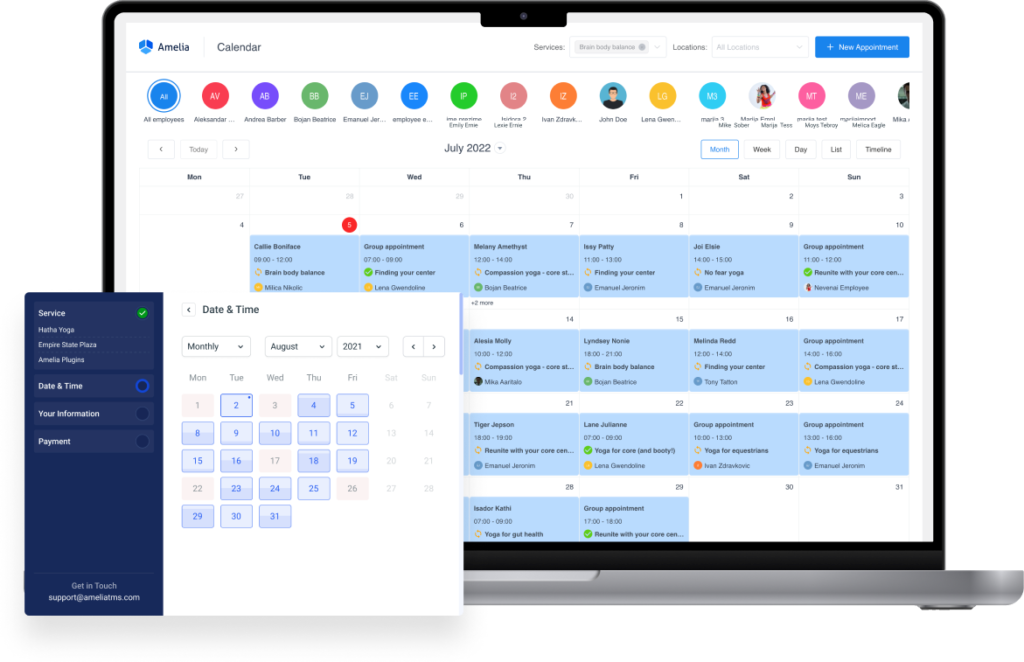
You can create single or multi-day events, set recurring options, control when booking opens and closes, assign a location and one or more staff members, add descriptions, images and prices, and tag events so visitors can filter them on the front end.
The best part is the overlap handling. If a staff member is working an event, their appointment slots for that period disappear automatically, so nobody gets double-booked.
Events display in a clean front-end calendar, and you choose whether past or closed events stay visible.
Amelia has a free Lite version on WordPress.org. Paid plans start at $49 per year for Starter, $89 for Standard, $149 for Pro covering five domains, and $259 for Elite with unlimited domains. Lifetime licences are available from around $299. Worth checking before you buy: event ticketing sits on the higher tiers, not the entry plans, so confirm which tier covers what you actually need.
Bonus: Galleryberg (Best for Event Photo Showcase)
The other plugins on this list handle the logistics: dates, tickets, registration. Galleryberg handles what happens afterwards. It’s a lightweight Gutenberg block for building image galleries, and event sites lean on it more than you’d expect.

Why it’s helpful for events:
- Venue walkthroughs: Use the Justified or Masonry layouts to show off the space before people book.
- Speaker portfolios: A clean Square grid of headshots for your guest speakers.
- Post-event highlights: Use the built-in lightbox to let attendees browse high-resolution photos from the day.
- Speed: Event pages get heavy with images. Galleryberg uses server-side rendering so the page still loads fast.
Key features:
- Four layouts: Tiles, Masonry, Square and Justified, with a Carousel layout in Pro.
- Professional lightbox: Zoom, touch swipe on mobile, and keyboard navigation.
- Caption controls: Display speaker names or session titles as overlays or below images.
- Randomise image order: Shuffle a gallery on each load, available in the free version.
- No coding required: It works directly in the WordPress block editor.
Galleryberg is free, with paid plans starting at $29 per year.
Which one should you actually pick?
Eleven options is a lot, so here’s the short version based on what you’re trying to do.
You’re publishing a schedule and nothing more. Go with the free version of The Events Calendar or Events Manager. Both will list events, show a calendar, and cost you nothing. The Events Calendar is easier to start with. Events Manager gives you more for free if you later want bookings.
You’re running a weekly timetable. MotoPress Events Calendar if you want a visual, Google Calendar style admin and don’t need bookings. Events Schedule if you want a proper class timetable with filters by instructor and location.
You’re selling tickets. This is where the decision matters most, because it’s where the costs hide. Eventnetic is the strongest value if your events repeat or you need reserved seating, since seating, invoices and every integration are included in the licence rather than sold as add-ons. Eventin is the better fit for conferences, where speakers, session schedules and certificates matter as much as the tickets. Avoid assembling a ticketing stack out of individually priced add-ons unless you’ve added up the total first.
You want people to submit their own events. WP Event Manager is built for exactly this, and guest submissions are free in Events Manager too.
You already take appointments. Amelia, so you’re not running two booking systems that don’t know about each other.
You’re a developer, or you have unusual recurrence rules. Event Organiser, which handles repeat patterns nothing else on this list can express.
One last piece of advice: almost every plugin here has a free version or a demo. Install two or three, create a real event in each, and see which admin screen you can live with. That will tell you more in twenty minutes than any comparison table, including this one.
Which one are you leaning towards, and what kind of events are you running? Let me know in the comments and I’ll point you in the right direction.
Found this helpful? See more of us on Google.
Add UltimateBlocks.com as a preferred source and our WordPress guides will show up more often in your Top Stories, AI Overviews and AI Mode.
Free, one tap, remove anytime


Leave a Reply